
Northern vs Southern Italy: Key Differences in Cost, Lifestyle & Work
If you're deciding between northern and southern Italy for relocation, the choice affects more than scenery.
Cost of living, pace of life, bureaucracy style, job market, infrastructure and daily rhythm differ significantly between regions. This guide breaks down the practical differences first — and then shares what living in both has taught me.
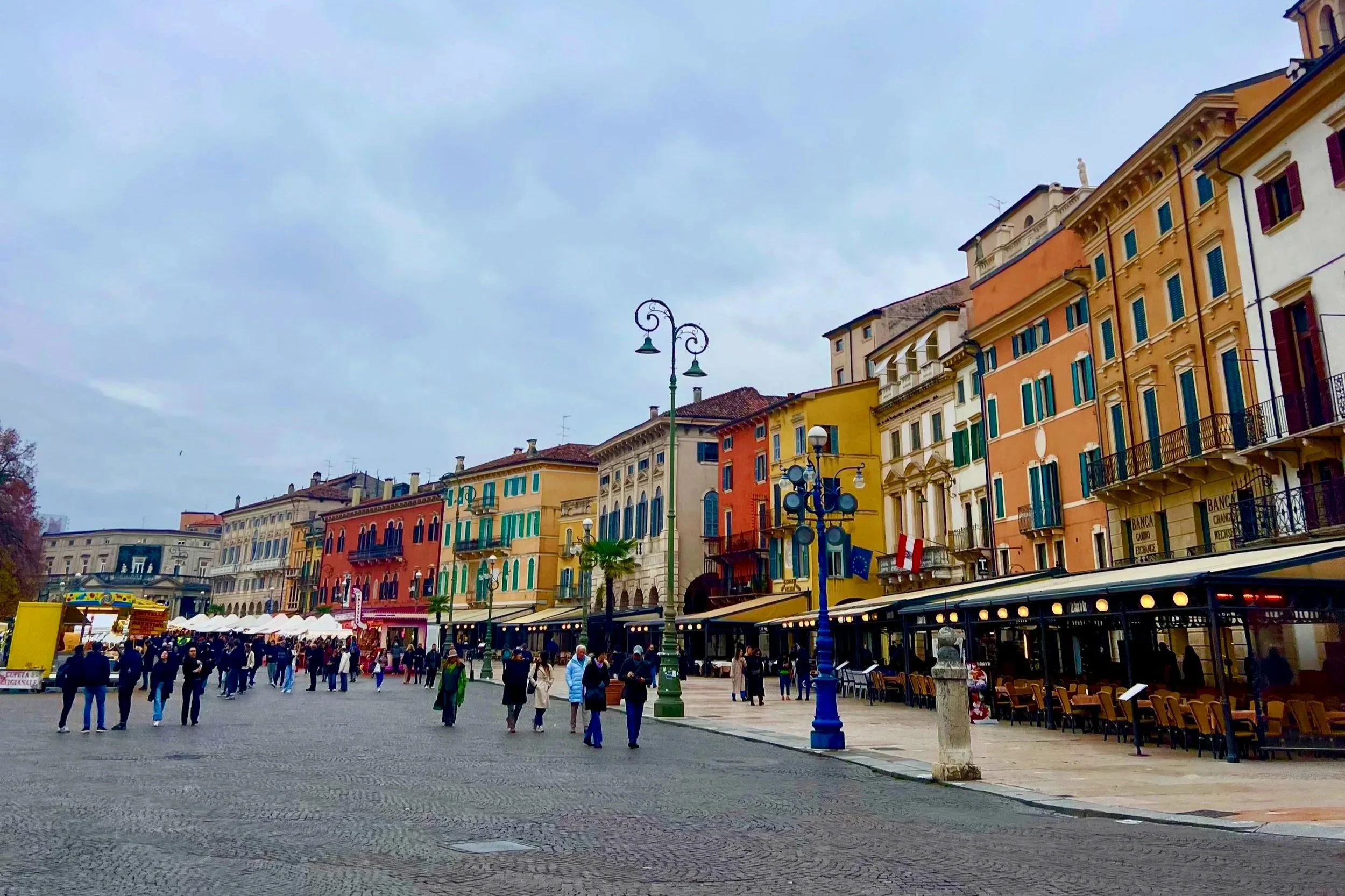
The beautiful streets of Verona in Italy’s north
Northern vs Southern Italy: A Practical Comparison
Cost of Living
Southern Italy is generally more affordable for rent and daily expenses, particularly in regions like Puglia, Calabria and Sicily. Northern cities such as Milan, Bologna and Verona typically have higher housing costs and higher average wages plus generally more expensive public transport, restaurants and day-to-date items.
Job Market
The north has stronger industry, corporate presence and employment opportunities. The south has higher unemployment and lower average wages, which is why many foreigners rely on remote income.
Pace of Life
Southern Italy operates on a slower, relationship-based rhythm. Northern Italy tends to feel more structured, efficient and time-driven.
Bureaucracy
Both regions operate under the same national laws, but processing speeds can vary significantly between comuni. Larger northern cities often handle higher volumes.
Infrastructure & Transport
Northern regions generally have stronger rail networks, business hubs and international connections. Southern regions may have fewer direct connections but offer a different quality of daily life.
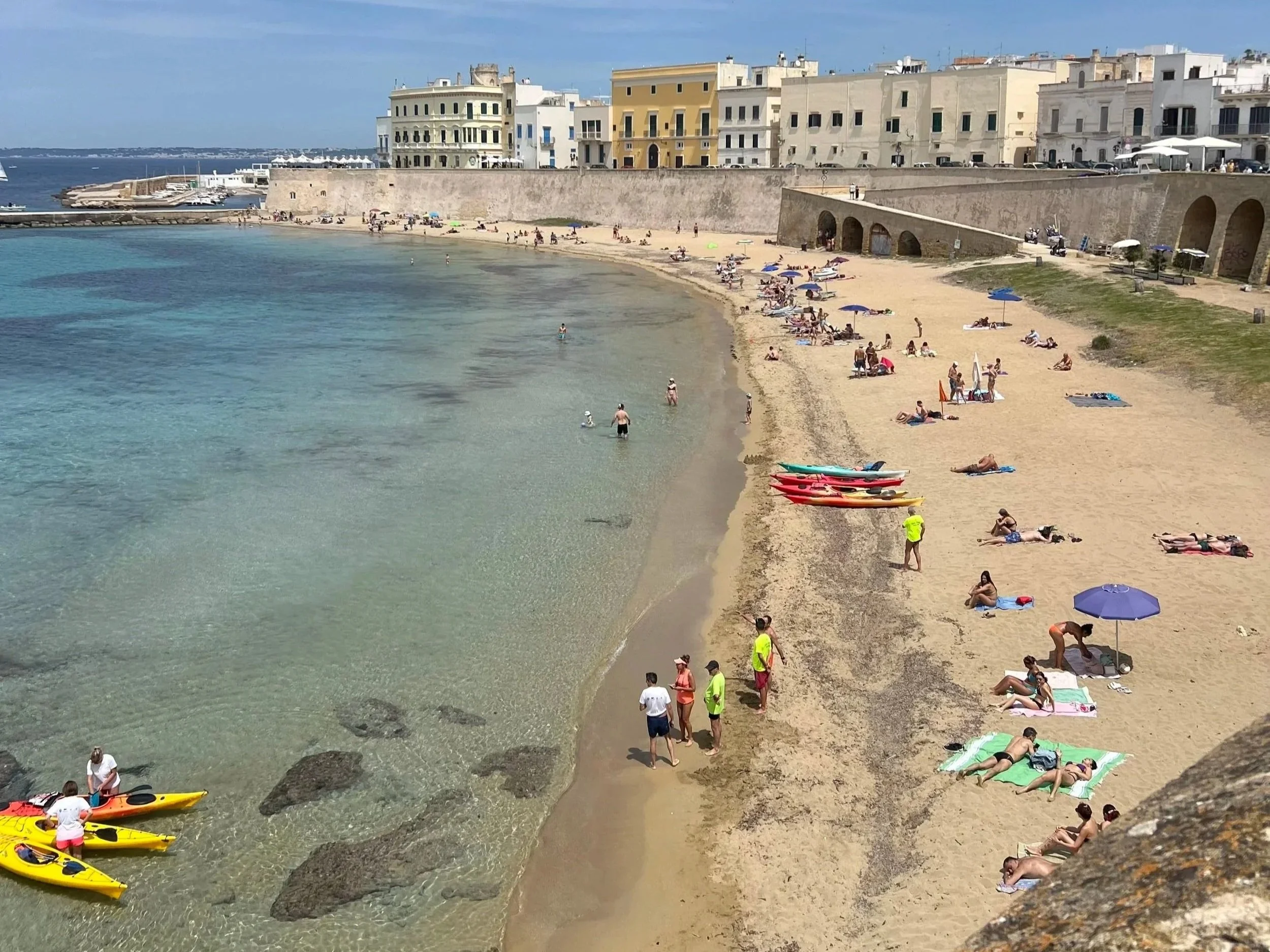
Gallipoli in Southern Italy
Southern Italy Taught me How to Slow Down
My life in the south, especially in Salento has changed the way I experience time.
Here, life stretches out. Mornings unfold slowly. Conversations don’t rush to their conclusion – there’s always time for one more coffee. The sea is not an occasional luxury, it’s simply part of the rhythm of living. I wasn’t always a “beach person,” but the south gently made me into one. Now, I crave that quiet moment, the sunsets where everything slows.
Southern Italy is deeply authentic. Not in a curated, Instagram-perfect way, but in a real, sometimes messy, always human way. Things can be frustrating: bureaucracy takes patience, plans change without warning and nothing ever runs quite on the clock you expect. But that friction teaches you something powerful: resilience, flexibility and presence.
The south taught me to:
Let go of control
Accept imperfection
Value connection over speed
And once that lesson settles into your bones, it never quite leaves.
Northern Italy Inspires me to Dream Bigger

Enjoying panettone in Milan
And yet, every time I return to northern Italy, something in me lights back up in a different way.
Cities like Milan and Verona move with a clarity and polish that feels electric. The architecture is confident. The fashion is effortless and inspiring. The energy is ambitious and powerful. Things feel possible.
Milan, in particular, reminds me so much of Melbourne. Maybe not aesthetically or on the same level – but it energises me in a similar way. The pace, the creativity, the design culture, the quiet confidence—it feels familiar.
Verona, on the other hand, captures something softer but just as refined. Romantic, elegant, deeply historical but still vibrant and alive. It’s the kind of place that feels cinematic even when you’re just walking to buy bread.
The north gives me:
Structure
Vision
Refinement
Creative drive
It reminds me that beauty can also come from precision.
If southern Italy appeals more to you, this guide breaks down what life there is really like.
A personal note…
People often ask me, “Are you a north of Italy person or a south of Italy person?” And my honest answer is always the same: I could never choose just one.
My roots are from the south. My mother is southern Italian (from Campania) and I grew up watching my nonna make pasta from scratch using passata made from my nonno’s homegrown tomatoes. We had homemade wine and an endless supply of vegetables pulled straight from the earth that we enjoyed during festive family dinners. Those traditions, the old ways; the pasion the rituals, the flavours live in me. They shaped me.
But I also spent my adult life in Melbourne and I fell deeply in love with its cosmopolitan rhythm (perhaps a little too much). The creativity, the fashion, the pace, the energy of the city became part of who I am and what I love the most. And that’s why northern Italy makes me feel so alive. At my core, I’m a city gal, but I love how I feel in the south.
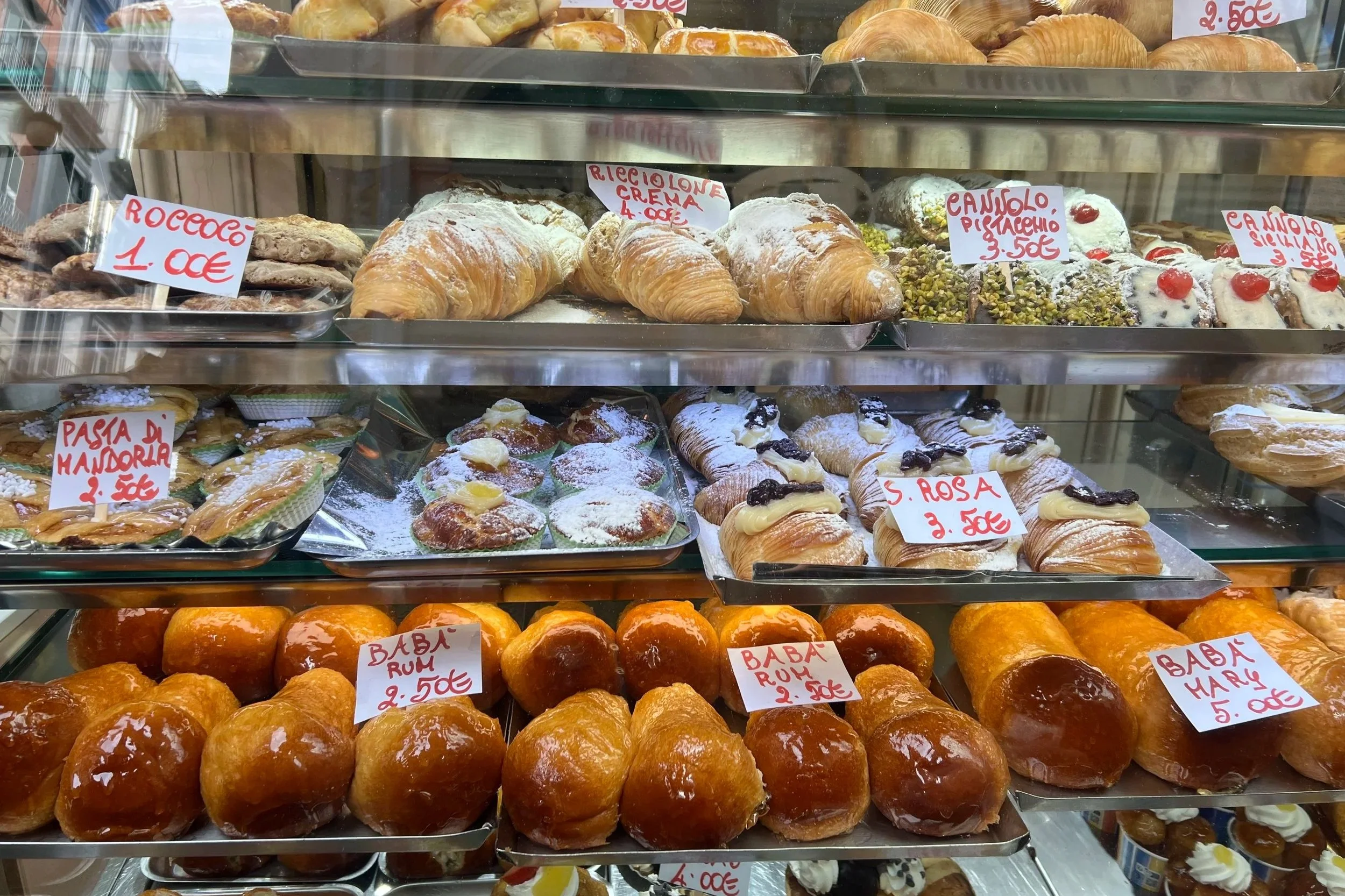
The most amazing pastries of Napoli
For me, beginning in the south was a smart entry point as well as a soulful one. Arriving with Australian dollars meant my money went further than it would have in the north. I could settle in without immediate financial pressure, learn how things work, build connections, make mistakes, and give myself time to adjust properly. That slower, more affordable start gave me confidence and options.
It also meant I could travel more. I didn’t have to choose between north and south. I could explore both, understand the differences for myself and decide what actually suited my lifestyle, my budget, and my long-term plans, not just what looked good on paper.
If there’s one thing I’ve learned, it’s that you don’t have to lock yourself into one version of Italy from day one. Start where it feels manageable. Let your life evolve. The beauty of Italy is that whether you begin in the quiet rhythm of the south or the energy of the north, there’s always room to shift, expand and change direction.
And sometimes, the best choice isn’t north or south—it’s simply giving yourself the space to experience both.
So which should you choose?
Southern Italy may suit you if:
You want lower living costs
You prioritise lifestyle over career progression
You work remotely or have passive income
You value community over pace
Northern Italy may suit you if:
You want corporate or local employment
You prefer faster systems and stronger infrastructure
You thrive in structured, high-energy environments
Budget is less of a deciding factor
For many people, the smartest move is starting in one region and reassessing once settled.
Thinking of moving to Italy? I help English Speakers find their feet in here — from visas to neighbourhoods to settling in. Get in touch to find out more.