
Living in Puglia in 2026: Town Comparisons & Real Life Insights
For a structured overview of costs, visas and relocation planning, read our complete Moving to Puglia guide here.
Where to Live, What It’s Really Like and What you Need to Know
If you’re considering moving to Puglia in 2026, chances are you’ve already fallen for the light.
The limestone towns.
The olive groves.
The coastline that feels endless.
But choosing a region is one thing. Choosing where to live and understanding what daily life actually looks like is another. I relocated to Lecce in 2025 and have spent the last 12 months immersing myself in the region that I now call home.
This guide is not about romanticising Puglia. It’s about helping you understand whether it genuinely suits you.
First: Puglia Is Not a Region That Feels the Same Wherever You Go
Puglia stretches over 400km. The experience in Bari is completely different from the experience in Salento. The region divides into:
Bari & central north
Valle d’Itria
Salento (southern Puglia)
When people say “I want to move to Puglia,” what they usually mean is one very specific type of life, so let’s break down the main areas properly. Please note, there are many smaller towns in and around the areas we’re mentioning, but these are best discussed when you know what sort of ‘lifestyle’ you’re after.
Lecce: The Cultural Base with Infrastructure
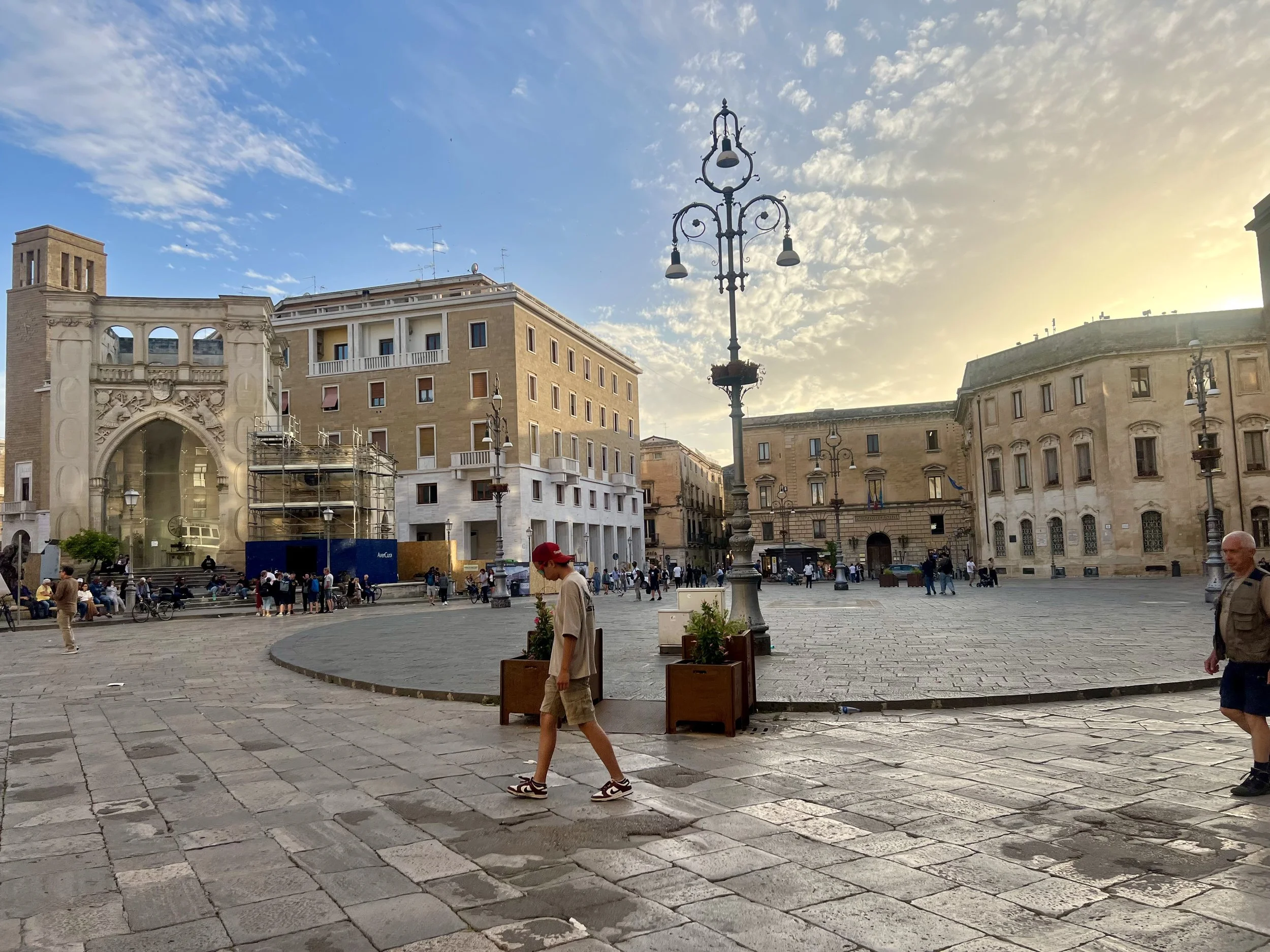
Lecce centro storico
Best suited for:
Remote professionals
Couples wanting community
First-time movers to Italy
People who want year-round life
Lecce is often referred to as the “Florence of the South” thanks to its extraordinary Baroque architecture and historic character. It’s charming and lively all year ‘round with a bustling tourist season that doesn’t feel too much compared to some of the other more popular beach towns.
Why it works:
Strong café and restaurant culture
Solid healthcare access
Reliable internet in most central areas
Proximity to beautiful beaches just 20 minutes away
Active international community (but not dominant)
University presence
There is a noticeable expat presence: British, American, Northern European (and now some Australians) — but you are still living in an Italian city. It doesn’t close up or feel like a ghost town in winter. If you’re nervous about isolation, Lecce is often the safest starting point in Salento.
Valle d’Itria: Martina Franca, Cisternino & Countryside Living
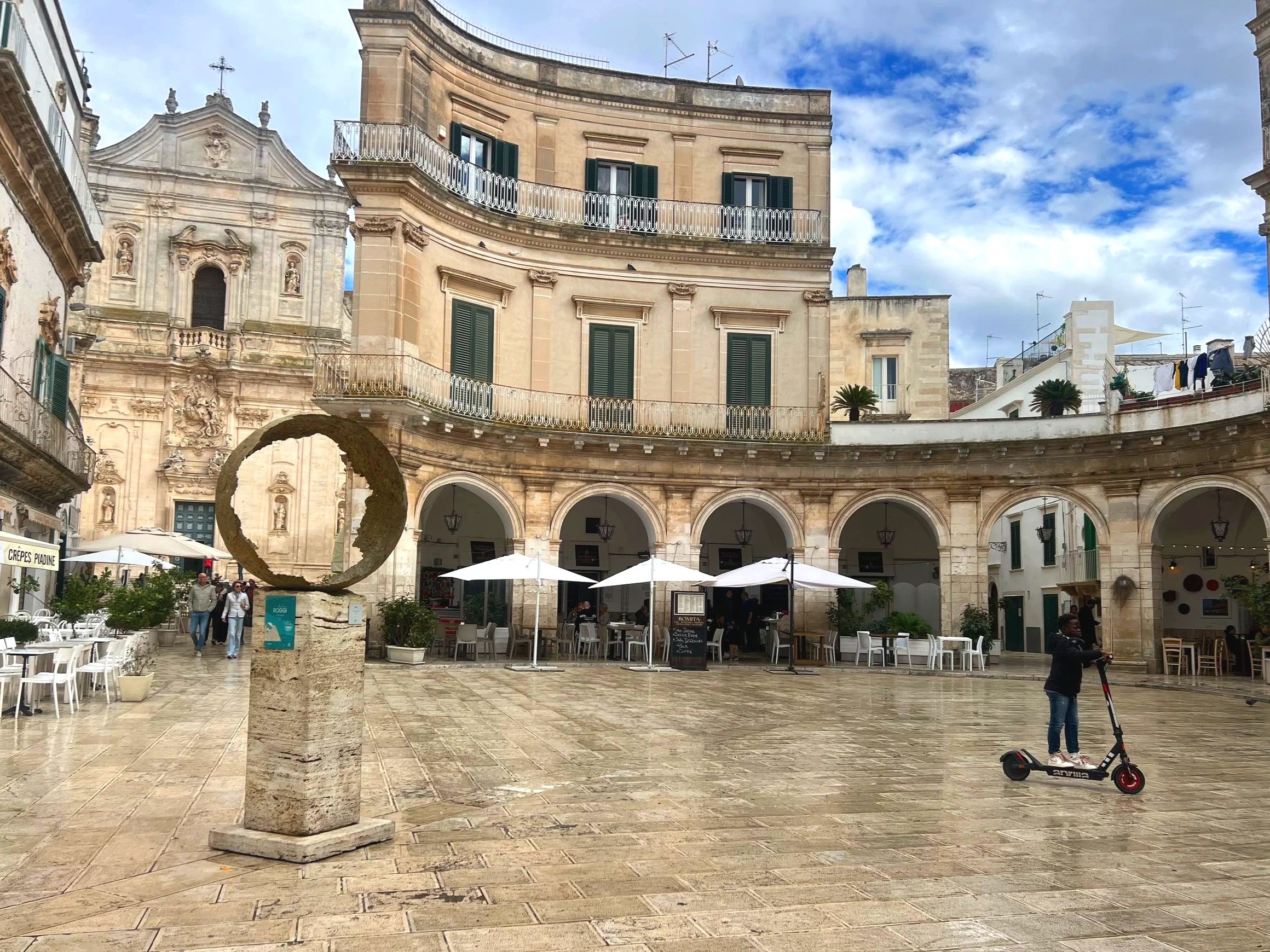
Martina Franca
Best suited for:
Lifestyle relocators
Buyers wanting trulli or countryside
Semi-retirees
Creative professionals
Valle d’Itria has seen significant international growth over the past decade.
Martina Franca feels structured and elegant.
Cisternino is charming and smaller.
Locorotondo is postcard-perfect.
This is where many foreign buyers purchase rural properties.
The reality:
You will need a car.
Winters are quiet.
English is less widely spoken outside tourist-facing roles.
Renovation projects can take longer than expected.
The international presence is often stronger than in Lecce’s outer suburbs, but it can feel more seasonal. This area suits people comfortable with slower rhythms and partial isolation.
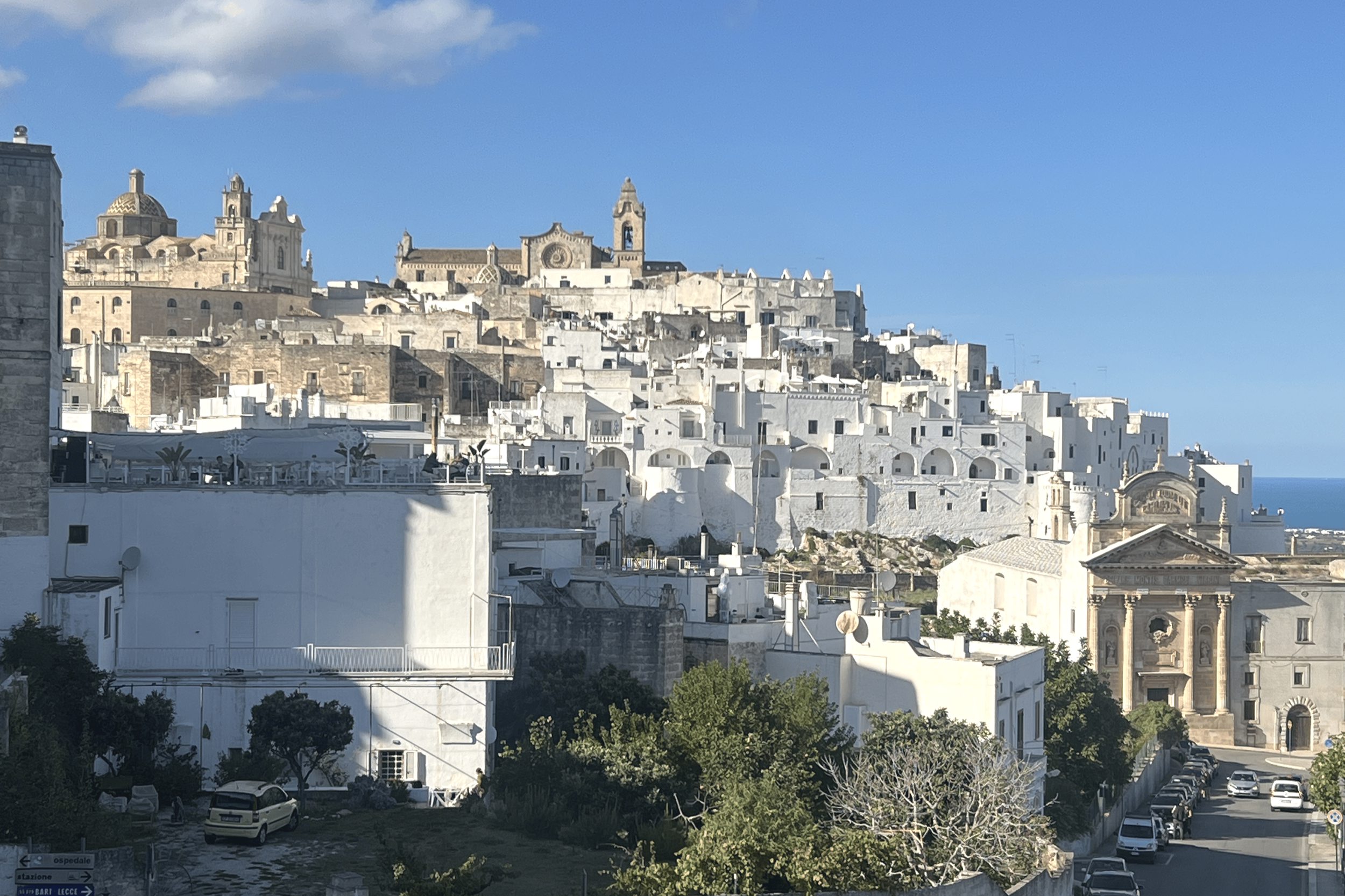
Ostuni: The Icon
Ostuni, the white city
Best suited for:
Buyers with larger budgets
Those prioritising aesthetic
People considering partial-year living
Ostuni is internationally recognisable. The white city effect is real. It is visually extraordinary and you genuinely don’t get sick of it.
But:
Property prices are higher than surrounding towns.
The international market has pushed values up.
It can feel very tourist-heavy in summer.
Winter is quieter than many expect.
If you want iconic scenery and are comfortable paying for it, Ostuni works beautifully. If you want full-time, grounded local life at a lower price point, surrounding towns often offer better value.
Bari: Urban Southern Italy
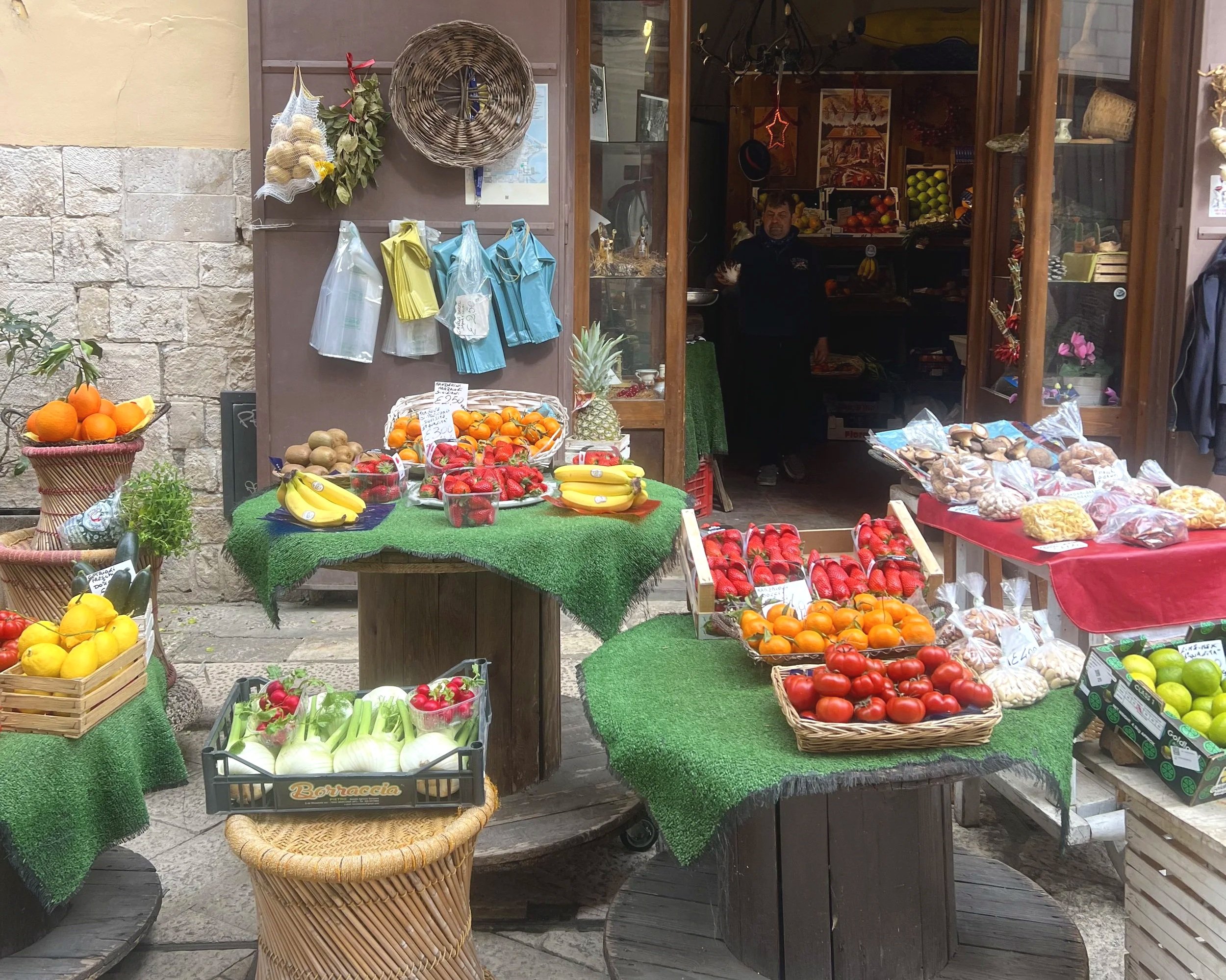
Bari greengrocer
Best suited for:
Professionals
Those needing strong transport links
People wanting true city life
Bari is Puglia’s capital.
It offers:
An international airport
Larger hospitals
Corporate presence
A more traditional urban feel
It is less “olive grove Instagram” and more real, working southern Italy. If you need infrastructure and transport ease, Bari deserves serious consideration, but it’s less romantic than Lecce. The centro storico is stunning though and you’re much closer to water.
Healthcare in Puglia: What to Expect
Once legally resident, you access Italy’s public healthcare system (Servizio Sanitario Nazionale).
In Puglia:
Larger cities (Bari, Lecce) have well-equipped hospitals.
Smaller towns rely on local clinics and regional hospitals.
Waiting times can vary.
Private healthcare is often used for:
Faster specialist access
English-speaking practitioners
Specific diagnostics
Most relocators combine public registration with occasional private appointments. Southern Italy does not mean poor healthcare, but facilities do vary by municipality. Proximity to a larger city can become more important as you age.
Driving in Puglia: You Will Need a Car
Public transport between major towns exists. Rural connectivity does not, especially if you want beach access in summer.
Buses run fairly well in peak season, but timetables change significantly in winter. That’s important to factor in.
Daily life often includes:
Supermarket runs outside town centres (unless you’re in Lecce, where you can walk most places within 20–25 minutes)
Beaches spread across the coastline
Properties located in the countryside
You may need to:
Convert your licence (depending on reciprocal agreements). This isn’t possible for everyone — some nationalities, including Australians and Americans, may need to sit the driving test in Italian.
Learn to navigate ZTL zones (restricted traffic areas).
Accept flexible parking culture.
Driving here isn’t as chaotic as people imagine, but it is assertive.
The Truth About the 7% Tax Towns in Southern Italy
Italy introduced a 7% flat tax scheme for certain retirees relocating to small municipalities in southern regions, including parts of Puglia.
Here’s the reality:
It applies only to pension income.
You must move to a qualifying town with fewer than 20,000 residents.
It does not apply to employment income.
The list of eligible municipalities is specific.
It is not a blanket “move to Puglia and pay 7% tax” offer.
For some retirees, it’s excellent. But lifestyle factors matter just as much:
How far are you from a hospital?
Will you rely on public transport?
How close are you to a larger town with services?
Tax is only one part of the decision.
Is Puglia Right for You?
Puglia suits people who:
Value community over convenience
Accept slower administrative processes
Prefer lower density than northern Italy
Appreciate seasonality
It does not suit people who:
Need fast systems
Expect English everywhere
Want polished infrastructure in every town
As someone who came from Melbourne and loves city life, Puglia has been a welcome change. Different enough to feel new and interesting, but not so small that it feels isolating. The food, the culture, and the people are genuinely exceptional.
If you’d like to explore your options for moving to Puglia in more detail, you can book a 30-minute Clarity Call here.